
Matshidiso Shai Breaks Silence After Private Video Linked to Limpopo Boy Spreads Online
Matshidiso Shai and Limpopo Boy controversy explained
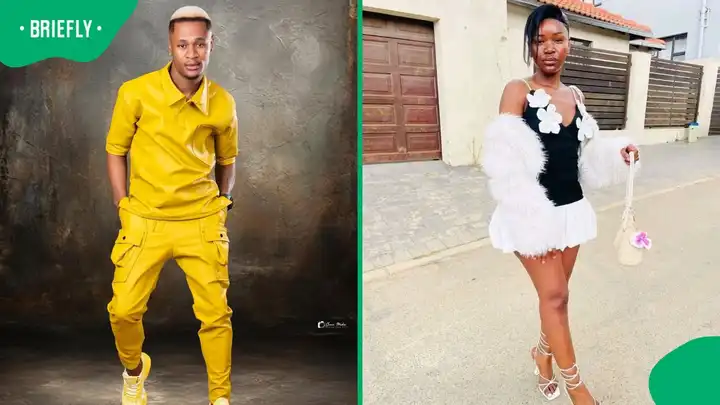
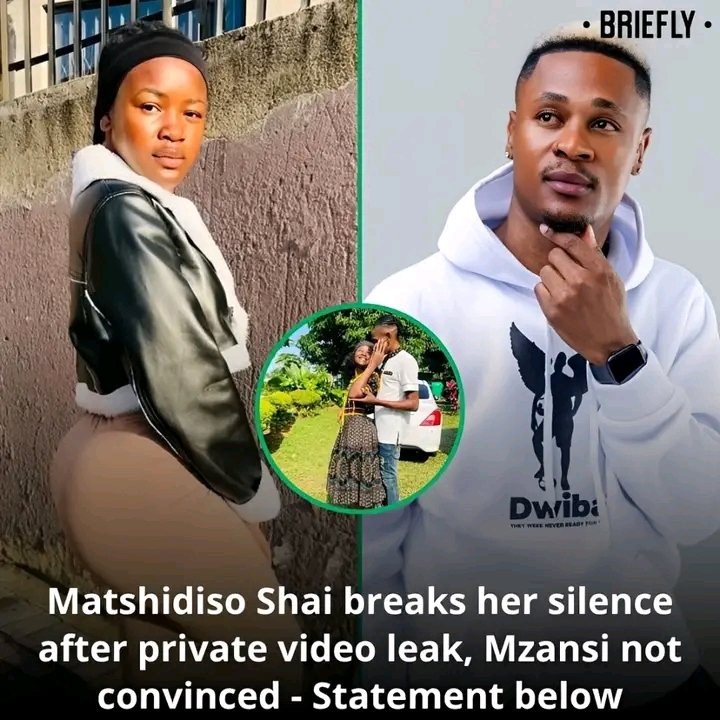
A private video involving influencer Matshidiso Shai and dancer Limpopo Boy became the centre of a major social-media controversy in South Africa after footage was circulated online without the consent of the people depicted, according to statements and media reports surrounding the incident.

The controversy has generated intense public discussion because Shai is married and the footage triggered questions about her relationship, her marriage and the circumstances surrounding her association with Limpopo Boy.
However, it is important to distinguish between what has been publicly reported and what remains unverified. The circulation of the private footage does not, by itself, establish every allegation being discussed on social media. This article does not reproduce, describe or link to the intimate material.

Limpopo Boy’s representatives have described the footage as stolen or unauthorised content and urged people not to circulate it. Shai later addressed the controversy publicly, accepting responsibility for the personal consequences of her actions and apologising to her husband, family, friends and supporters.
The incident has therefore developed into two separate but connected issues: the personal fallout surrounding Shai’s marriage and the much wider concern over the distribution of private material online.
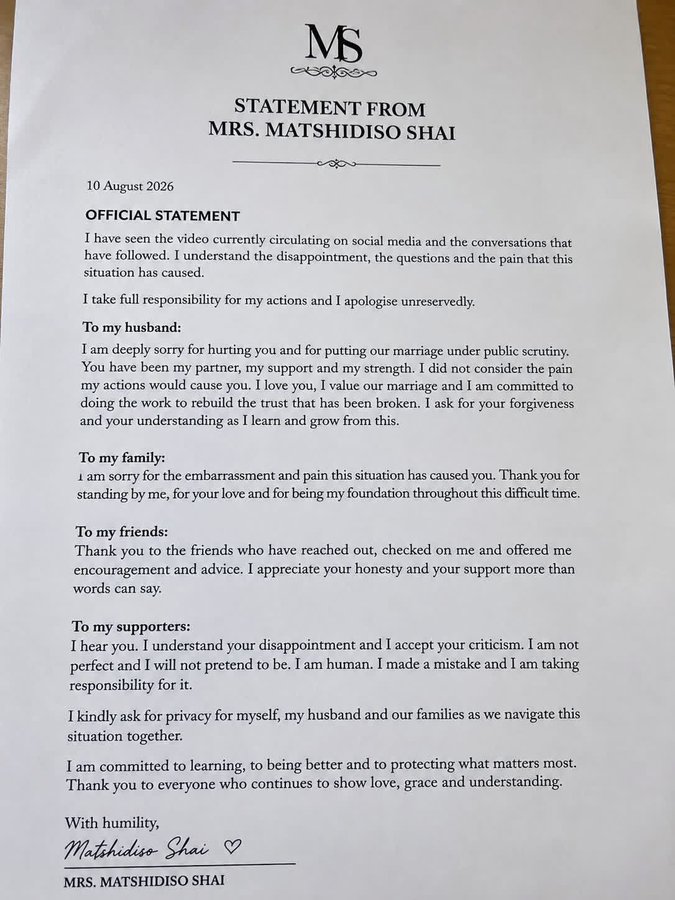
Matshidiso Shai issues an unreserved apology
On 10 August 2026, Shai released a public statement addressing the controversy.
In the statement, she accepted responsibility for her actions and apologised for the hurt caused to those close to her.
She also directed a particularly personal apology towards her husband, acknowledging that the situation had placed their marriage under intense public scrutiny.
Shai said she was committed to rebuilding trust and working through the consequences of the controversy privately.

Her decision to address the matter publicly came after days of intense online discussion, with social-media users sharing opinions about the footage and the people allegedly involved.
Why the controversy became bigger than social media gossip
The story has attracted attention not simply because of the identities involved, but because it highlights a serious problem facing public figures and ordinary South Africans alike: the rapid spread of private digital material once it reaches social-media platforms.
A private video can be copied, reposted and forwarded thousands of times within minutes. Even deleting the original upload may not stop copies from appearing elsewhere.
South African law recognises the seriousness of distributing intimate material without consent.
Under Section 16 of the Cybercrimes Act 19 of 2020, unlawfully and intentionally disclosing an intimate image through an electronic communications service without the person’s consent is an offence. The legislation also provides a specific definition of an intimate image and protects a person’s reasonable expectation of privacy. (Justice)
South African government messaging has also warned the public against sharing images and videos of people without consent, while the Film and Publication Board has highlighted image-based abuse as a growing online concern. (SAnews)
That means users who receive private material should think carefully before forwarding it. Being the person who received a video does not automatically give someone permission to redistribute it.
Limpopo Boy’s representatives respond
Representatives linked to Limpopo Boy have reportedly characterised the footage as stolen content that was distributed without authorisation.
That response is significant because it shifts part of the discussion away from celebrity gossip and towards digital privacy.
Rather than treating leaked private material as entertainment, online users should recognise that sharing such material can potentially cause serious reputational, emotional and legal consequences.
At the time of publication, there has been no independent verification establishing every claim being circulated on social media about how the footage was obtained or who first distributed it.
Shai asks the public for privacy
Alongside her apology, Shai appealed for privacy for herself, her husband and their families.
Her request comes after the controversy moved beyond private relationships and became a highly visible online discussion.
For people caught in viral controversies, the damage can continue long after the initial post disappears. Screenshots, reposts and archived copies can remain online and continue attracting attention.
That is why the responsible approach is not to search for, download or redistribute the private footage.
What this means for social-media users
The controversy provides an important reminder about digital responsibility.
If someone sends you private or intimate material involving another person, the safest response is not to forward it, repost it, download it or ask others to send it to you.
Instead, users can report the material through the relevant platform’s reporting system.
South African authorities have previously investigated and prosecuted cases involving the unlawful disclosure of intimate digital material. In a 2025 case, the Hawks reported that a man received an effective five-year direct prison sentence after being convicted of cyber forgery and disclosure of intimate data images.
The lesson is straightforward: digital content does not become legal to distribute simply because it has gone viral.
The financial and reputational cost of a viral controversy
There is also a financial dimension to online controversies that is often overlooked.
For influencers, entertainers and entrepreneurs, reputation can have a direct relationship with income. Brand partnerships, event appearances, advertising agreements and other commercial opportunities can depend on public trust.
A viral controversy can therefore create consequences beyond social-media criticism.
Businesses increasingly conduct reputational assessments before entering commercial relationships, while insurers and financial institutions operate in an environment where risk management, documentation and responsible conduct matter.
For anyone building a public-facing career, protecting personal information and understanding digital risk should be treated as part of broader financial and professional planning.
A privacy issue, not an invitation to circulate the footage
The Matshidiso Shai and Limpopo Boy controversy has generated considerable public interest, but public interest does not remove a person’s expectation of privacy.
There is a difference between reporting that a private video has circulated and helping that video circulate further.
Responsible reporting should focus on verified statements, the public response and the wider implications rather than reproducing intimate material.
That distinction is particularly important in the age of social media, where one repost can expose private information to an audience far beyond the original circle of people who received it.
What Matshidiso Shai said about rebuilding her marriage
The most personal part of Shai’s statement was her message to her husband.
She acknowledged the hurt caused by the controversy and said she wanted to rebuild the trust that had been damaged.
Rather than attempting to provide further details about the private circumstances of the relationship, Shai asked for space to deal with the matter away from the public spotlight.
That request has become an important part of the story because the controversy involves not only public figures but also families and private relationships.
What remains unclear
Several details circulating on social media remain allegations or claims that have not been independently established.
These include questions about exactly how the private footage was obtained, who initially distributed it and the full circumstances surrounding the people depicted.
It is therefore important not to present social-media speculation as established fact.
As of 13 August 2026, the publicly reported developments centre on Shai’s apology, the response from Limpopo Boy’s representatives and calls for people to stop circulating the private material.
The bigger lesson for South Africa’s digital audience
The controversy is another reminder that smartphones and social-media platforms have changed the meaning of privacy.
A private recording can become a national talking point almost instantly. Once that happens, the people involved may have little control over where copies appear.
For social-media users, the safest principle is simple:
If you did not receive permission to share private material, do not share it.
That approach protects the dignity of the person involved and can also protect the person receiving the material from potential legal consequences.
The Cybercrimes Act specifically criminalises the unlawful and intentional disclosure of intimate images without consent, making digital privacy more than simply a matter of online etiquette. (Justice)
Frequently Asked Questions
What happened between Matshidiso Shai and Limpopo Boy?
A private video involving Matshidiso Shai and dancer Limpopo Boy circulated widely on social media in August 2026. Shai subsequently issued a public apology addressing the personal fallout, while representatives linked to Limpopo Boy said the material had been shared without authorisation.
Did Matshidiso Shai confirm everything being said online?
Shai publicly accepted responsibility for her actions and apologised to her husband and family, but social-media users should not automatically treat every allegation circulating online as confirmed fact.
Was the private video shared with consent?
Representatives linked to Limpopo Boy described the material as stolen or unauthorised content. The circumstances surrounding its original acquisition and distribution should not be treated as established beyond the statements that have been publicly reported.
Is sharing an intimate video without consent illegal in South Africa?
South Africa’s Cybercrimes Act provides that unlawfully and intentionally disclosing an intimate image electronically without the depicted person’s consent is an offence. (Justice)
Should people download or forward the video?
No. Downloading, forwarding or reposting private intimate material contributes to its circulation and can create additional privacy and legal risks. The responsible approach is to avoid sharing it and report inappropriate content through the relevant platform.
Editorial note
This article intentionally does not identify, describe or link to the private footage. The focus is on verified public statements, the reported response to the controversy and the broader issue of digital privacy.
Where allegations have not been independently established, they are identified as allegations rather than presented as fact.
Sources and references: Public statements and contemporary reporting on the controversy; South Africa’s Cybercrimes Act 19 of 2020; South African government guidance on online safety and non-consensual image sharing. (Yen.com.gh – Ghana news.)